Main Concept
Artificial Intelligence (AI) is a field of computer science dedicated to solving cognitive problems that would normally require human intelligence, such as understanding and generating human language, recognizing images and video content, making predictions based on data, identifying patterns, detecting anomalies, providing recommendations, and more. It’s an umbrella term for a variety of techniques and approaches.
Key Aspects
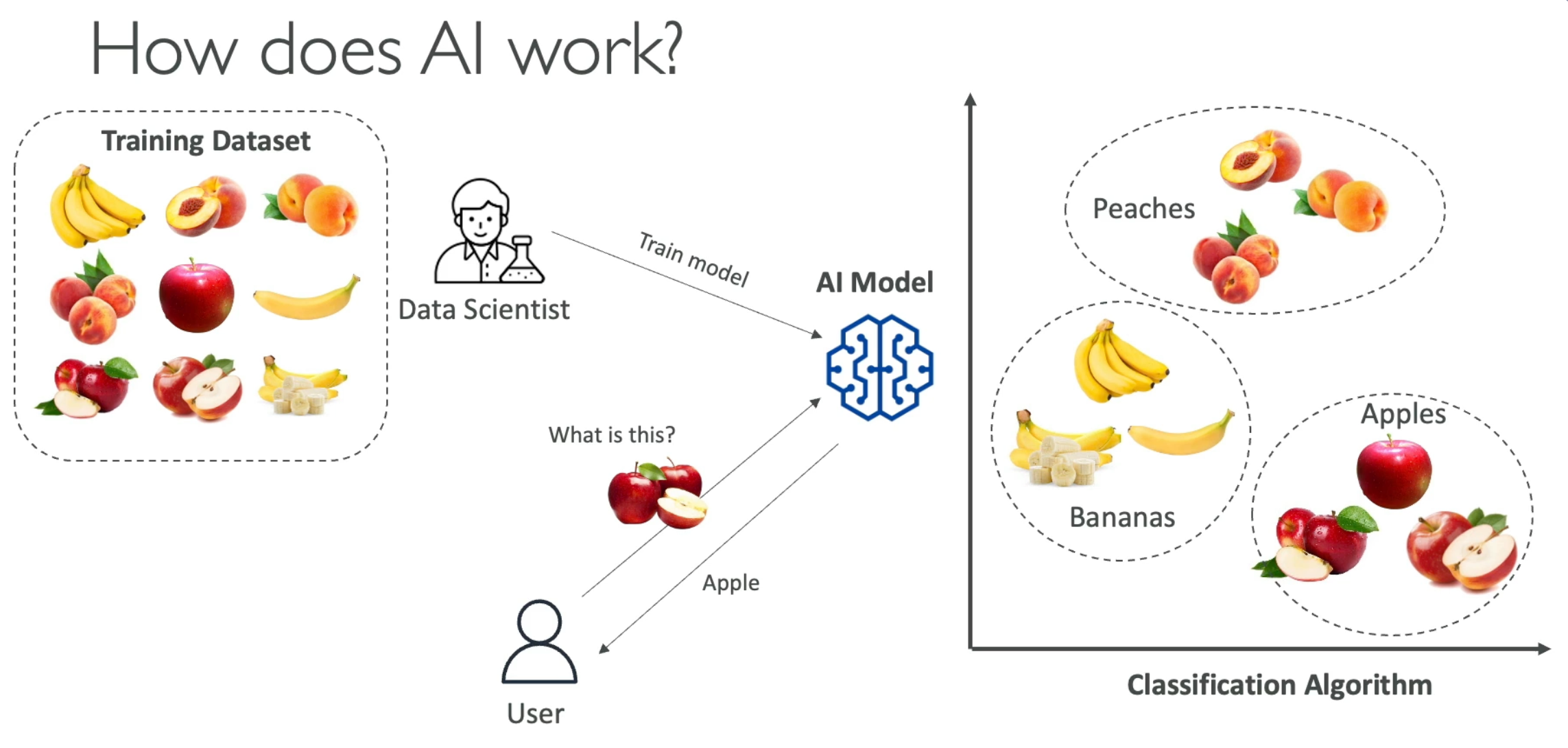
At a high level, an AI system involves four key elements:
- A Training Dataset — the data used to train the model. It can vary significantly in size (sometimes massive amounts, but not necessarily), and can be labeled or unlabeled depending on the training approach and model type.
- The Training Process — where a data scientist applies AI algorithms and methods to the training dataset to produce a model.
- A Data Scientist — the person responsible for designing, training, and evaluating the model.
- The User — who interacts with the trained model to get a response. This interaction is known as inferencing.
AI Components or Layers
Another way to look at an AI system is as a stack of layers, each building on the previous one:
- Data Layer — the raw material: the vast amounts of data needed to train the model.
- ML Framework / Algorithm Layer — where data scientists and engineers work together to understand use cases, requirements, and which algorithms or frameworks can best address them.
- Model Layer — the actual model: its structure, parameters, functions, and the optimizer used during training.
- Application Layer — how the model’s capabilities are served and exposed to end users.
Use Cases
- Computer Vision
- Facial Recognition
- Fraud Detection
- Intelligent Document Processing (IDP)
Examples
Basic Example
A fruit classification algorithm trained on a large dataset of labeled images. A user inputs a new image and the model classifies what type of fruit it is — even without having seen that exact image before.
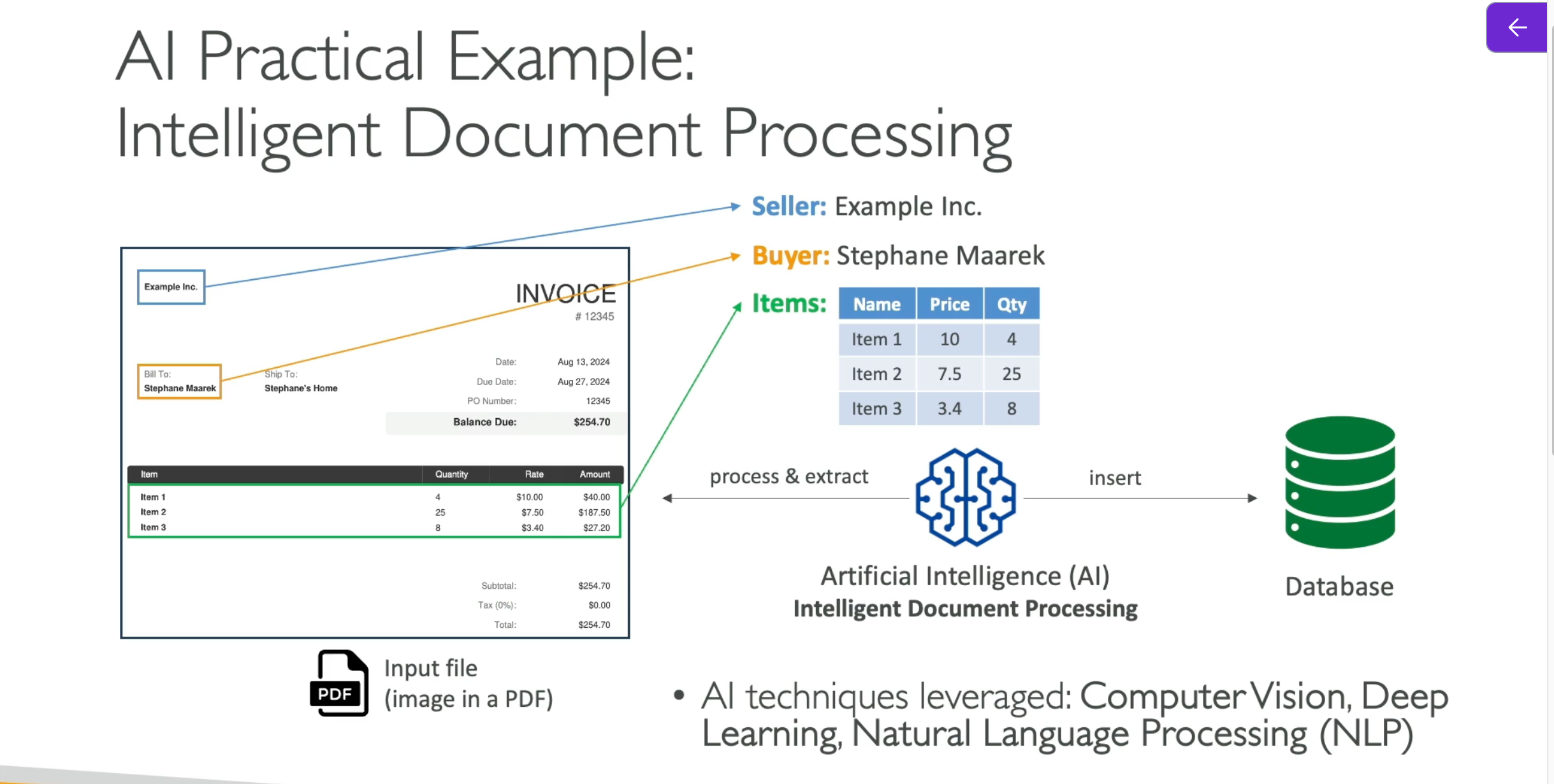
Practical Example: Intelligent Document Processing
When you have invoices stored as PDF files, AI can extract and structure the data they contain for further processing. This typically combines Computer Vision (to read the image), Natural Language Processing (to understand the text), and Deep Learning (to handle variations in format and layout). This kind of system is already in production across many industries.
AI Subdisciplines
Reflection Questions
- Q: What is human intelligence?
- Q: What are cognitive problems?
- Any task that requires thinking, memorizing, analyzing, reasoning, etc.
- Q: So, what is a Model?