Core concept
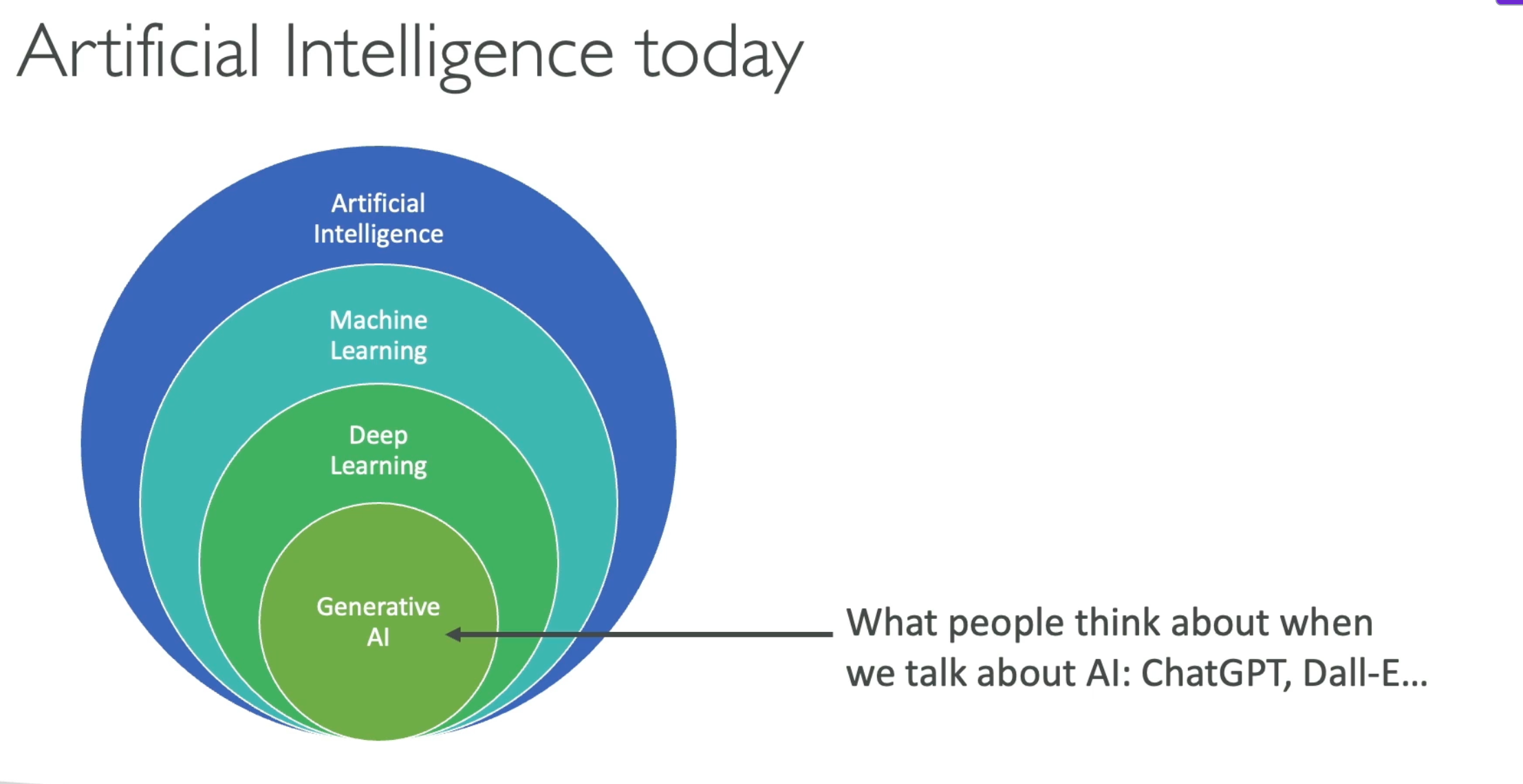
AI, ML, DL, and GenAI form a nested hierarchy where each is a subset or specialization of the previous one.
The hierarchy:
- AI (broadest): Field solving cognitive problems requiring human-like intelligence
- ML (subset of AI): Approach where systems learn patterns from training data
- DL (subset of ML): Technique using multi-layered neural networks
- GenAI (subset of DL): Application focused on generating new content
- DL (subset of ML): Technique using multi-layered neural networks
- ML (subset of AI): Approach where systems learn patterns from training data
Key relationships
Containment: Each level is a more specific instantiation of the level above it. Not all AI is ML (rule-based systems exist), not all ML is DL (decision trees, random forests), not all DL is GenAI (image classification with CNNs isn’t generative).
Dependency: GenAI depends on DL techniques, which depend on ML approaches, which serve the broader AI goal. You can’t have GenAI without DL, but you can have ML without GenAI.
Problem-solving scope: AI defines the problems (cognitive tasks); ML defines the approach (learning from data); DL defines the technique (neural networks); GenAI defines the application (content generation).
Key aspect
Under AI umbrella we can include different approaches or sub-fields:
- Rule based systems: Explicitly programmed “if-then” rules (e.g. “if this to that).
- Expert systems: Codified human expertise into logical rule.
- Search algorithms: Chess programs evaluates possible moves.
- Machine Learning: Learning from data (which is just one approach within AI)
TIP
Key point: You can create AI without any learning - just good programming and logic.
Related Notes
- Artificial Intelligence (AI)
- Machine Learning (ML)
- Deep Learning (DL)
- Generative AI (GenAI)
- Data Science